CaseTrace™ · The Traces

Nine Traces, Trace by Trace

Here is what CaseTrace does, Trace by Trace.

Nine Traces, one sealed record.

  1. LiveTrace™
  2. ReTrace™
  3. ThreadTrace™
  4. SceneTrace™
  5. TagTrace™
  6. WeaponTrace™
  7. FeatureTrace™
  8. GestureTrace™
  9. HazardTrace™
Trace by Trace

Each Trace is one tool inside CaseTrace.

The Traces run on the cameras a location already has, with CaseTrace Edge, a palm-sized box, on top of the recorder, or from a photo taken on the phone. Each one reads something plain, a picture, a count, a clock, a plate, and hands it to a person. The system never decides. Every determination is made by a person.

01 · Now

LiveTrace

What it does. The live picture from your own cameras, on the phone or at the desk, on demand while someone watches. Nothing is kept.

What a person decides. A person decides when to look. The smart box pulls the picture for as long as they watch and keeps none of it. No video is kept; the audit trail keeps one line that says who looked, and when.
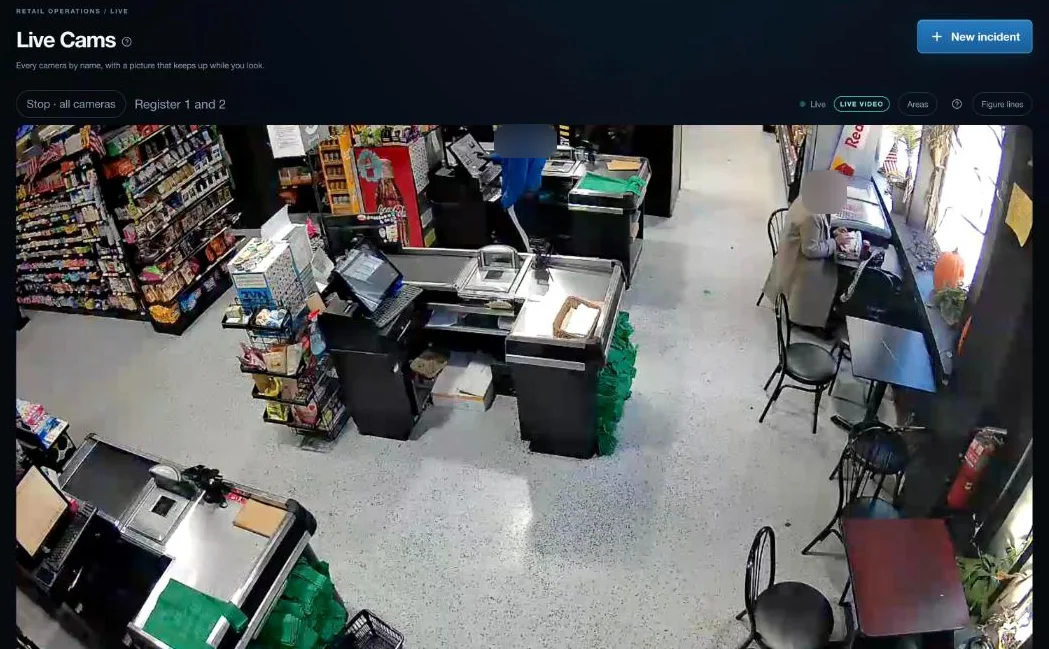
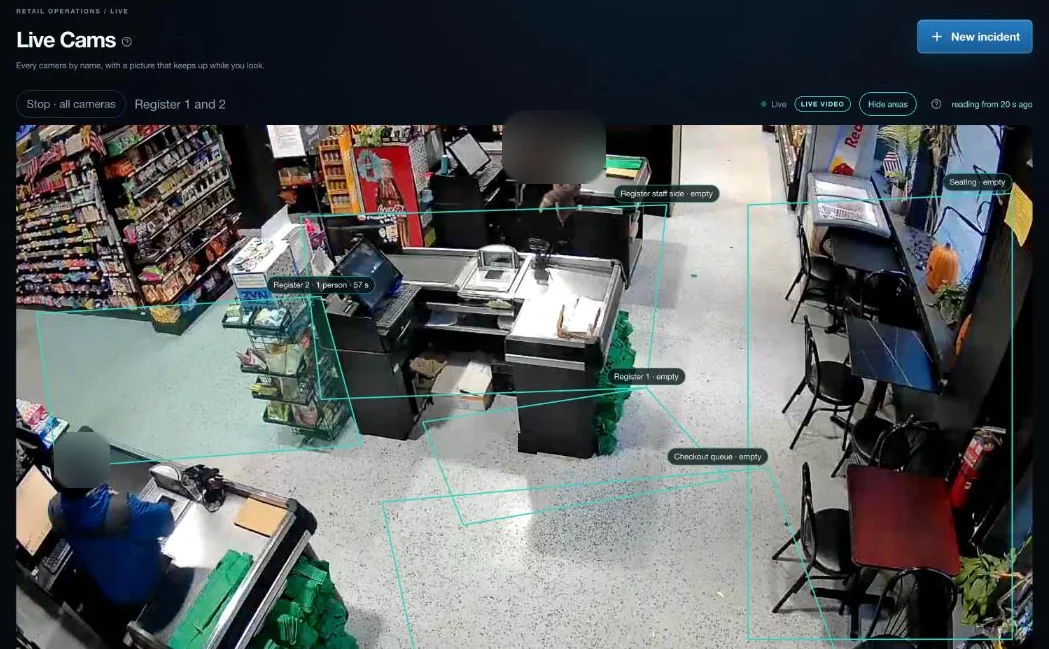
Live Cams in CaseTrace: the Register 1 and 2 camera, live, with nothing drawn on the picture.
LiveTrace: the plain live picture, nothing drawn on it, nothing kept.
02 · Back

ReTrace

What it does. Recorded review. The smart box walks a person back through the cameras and pins the reel, cut from the footage your recorder already holds.

What a person decides. A person asks for the rewind, picks the moment and places a legal hold. A reel shows where someone went; it says nothing about who they are. A person decides what it shows.

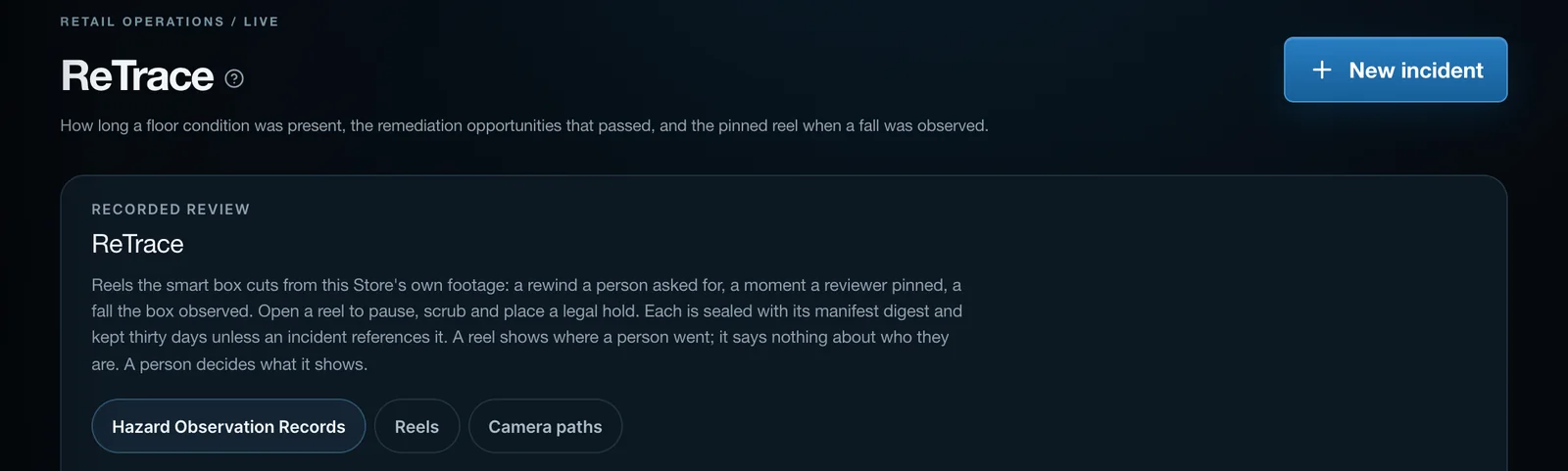
The ReTrace page in CaseTrace Retail: recorded review, with tabs for Hazard Observation Records, Reels and Camera paths.
ReTrace at the desk: reels the smart box cuts from the Store's own footage.
03 · Who

ThreadTrace

What it does. Search back by what someone wore or carried, or a vehicle by type and colour, with the closest dressed-alike figures first, out of footage your own cameras already hold.

What a person decides. A person decides who is who. The search returns figures and moments, never a name.

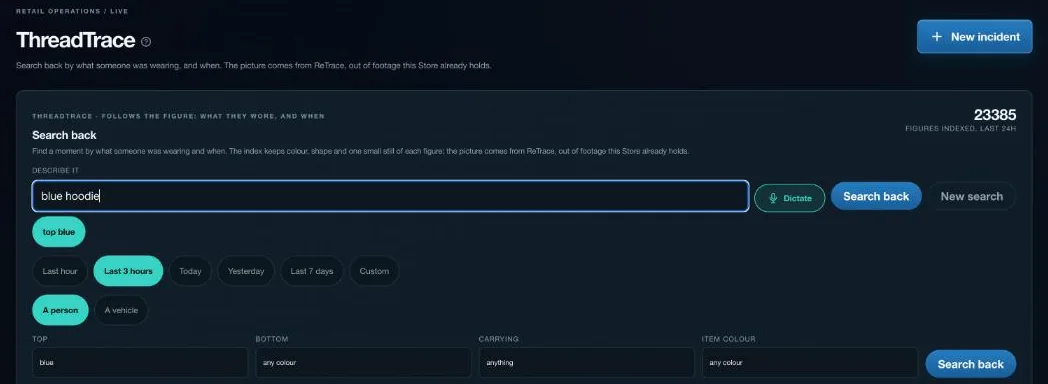
ThreadTrace in CaseTrace Retail: Search back with blue hoodie typed, the time range chips, and fields for top, bottom, carrying and item colour.
ThreadTrace: a blue hoodie, the last three hours, a person or a vehicle.
04 · Where, and how many

SceneTrace

What it does. Named areas drawn on a camera. Each one reads empty, or how many people are there and for how long, or just left; at a table, needs bussing. FigureTrace™, the smart box's posture reading drawn as lines, tells seated from standing.

What a person decides. A person draws the areas and gives each its name. The reading is a count and a clock, never a person, and nothing here names a person.

Live Cams in CaseTrace: the Register 1 and 2 camera with five named areas drawn on it, one reading Register 2, 1 person, 57 seconds, and the others reading empty.
SceneTrace: five named areas on one camera, each with its own reading.
05 · The plate

TagTrace

What it does. Run the tag. A plate read from a still or a photo, on a record or not, checked as text against your own enrolled vehicle records.

What a person decides. A plate read is an observation of a vehicle. It says nothing about who was driving, and a person decides what happens next.

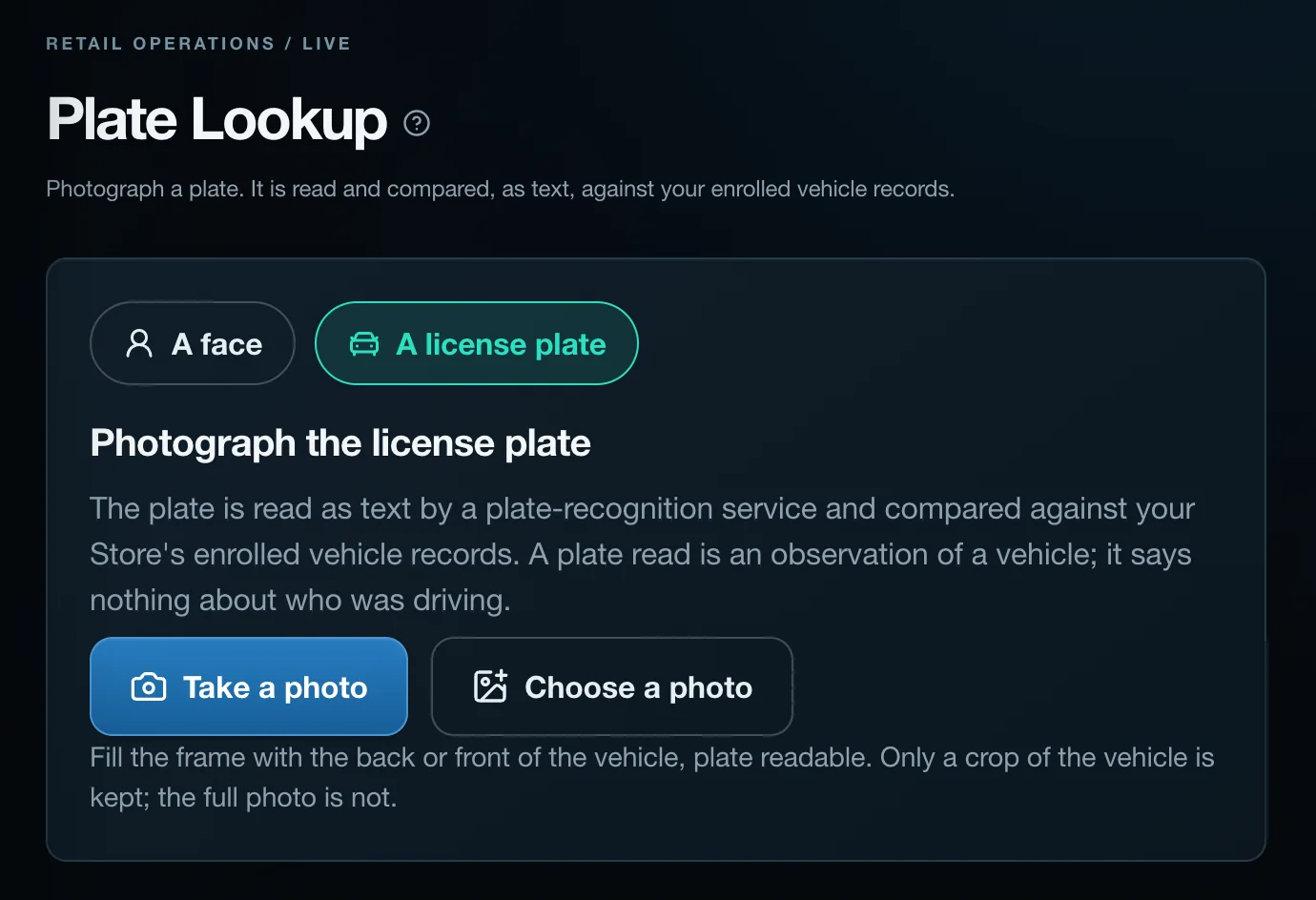
Plate Lookup in CaseTrace Retail with A license plate chosen: Take a photo or Choose a photo, and the words that a plate read says nothing about who was driving.
TagTrace: photograph the plate, or choose a still, and run the tag.
06 · The alert

WeaponTrace

What it does. The case a gun alert opens: acknowledged, the area, the referral, worked and closed on the record.

What a person decides. The alert is an input. A person acknowledges it, works it and closes it, and says whether a weapon was confirmed. Nothing escalates on its own.

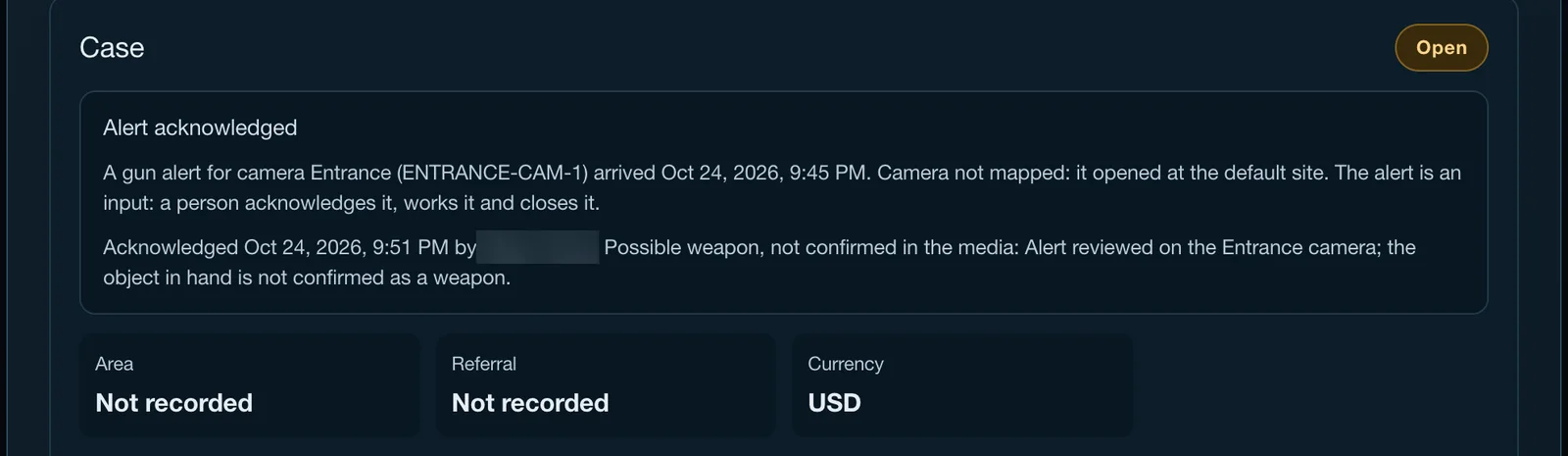
A WeaponTrace case in CaseTrace: the gun alert acknowledged by a person, noted as a possible weapon not confirmed in the media, with the area and the referral still to be recorded.
WeaponTrace: the case the alert opened, acknowledged and open.
07 · The Similarity Check

FeatureTrace

What it does. A possible relationship between a face in front of you and your own enrolled records, shown as similarity, never identity. Off and invisible by default; one switch, per location, with notice.

What a person decides. A person assesses it: appears to be the same, not the same, or no action. Below Moderate similarity no record is named. The system never decides.

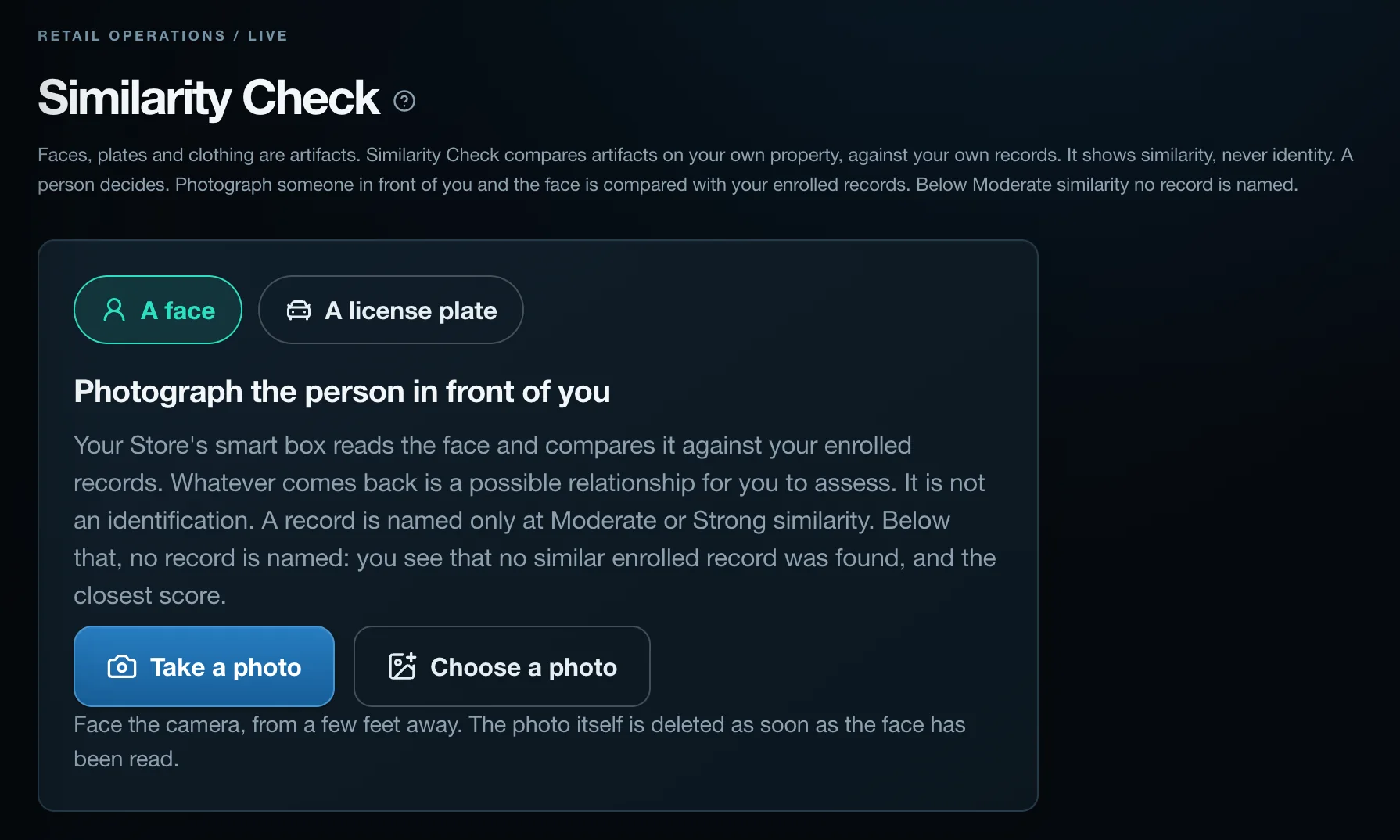
Similarity Check in CaseTrace Retail with A face chosen: the words that whatever comes back is a possible relationship for a person to assess, not an identification.
FeatureTrace: the Similarity Check, against your own records only.
08 · What a hand did

GestureTrace

What it does. A concealment, a consumption, a skipped scan, read by the smart box from FigureTrace and filed as an observation, not an accusation. Collected quietly until a Store turns it on; a partner's alerts land here too, where a Store has them.

What a person decides. A person watches the clip and says what they saw, or takes no action. An observation becomes a record only when a person logs it.

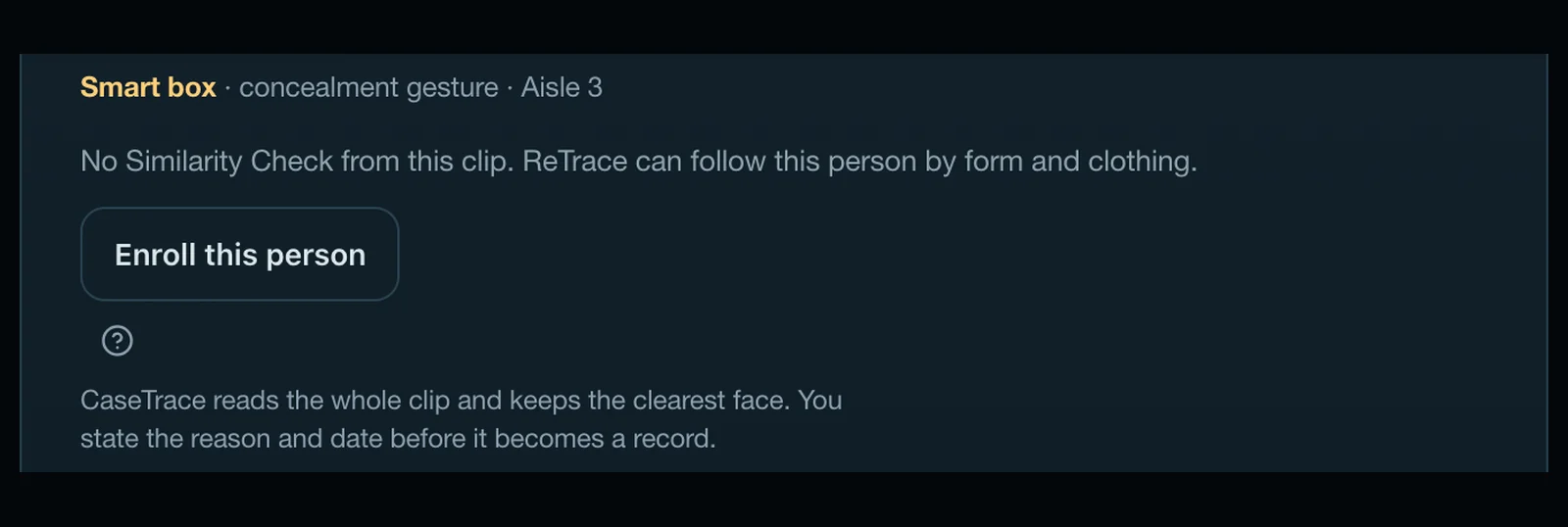
The Observation sheet in CaseTrace: a concealment gesture read by the smart box on the Aisle 3 camera, filed as an observation, not an accusation, with Enroll, ReTrace and ThreadTrace beside it.
GestureTrace in the Review Queue: an observation recorded, waiting on a person.
09 · What is on the floor

HazardTrace

What it does. Hazard observations: when a floor condition was first observed, how long it sat, every chance to clear it, whether it was cleared, and the fall reel when a fall was observed.

What a person decides. A person reads the clock and chooses: no action, view the record, or log the incident.

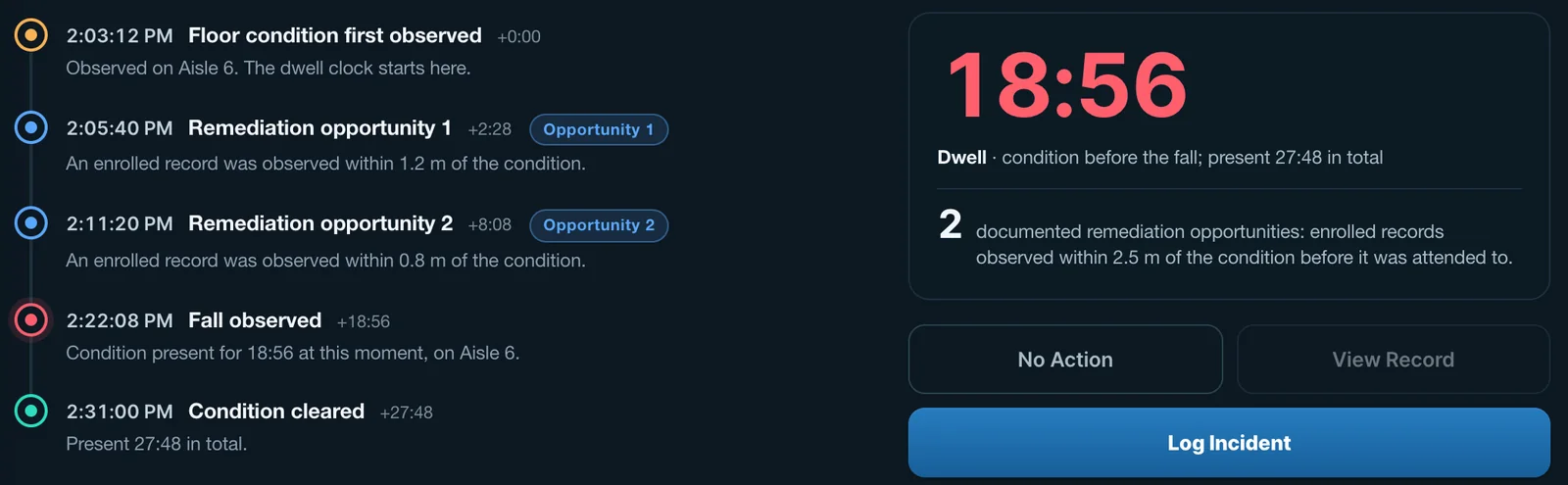
A HazardTrace record in CaseTrace Retail: the floor condition first observed, two remediation opportunities, a fall observed at 18 minutes 56 seconds, the condition cleared at 27 minutes 48 seconds, and the choices No Action, View Record and Log Incident.
HazardTrace: the dwell clock, every chance to clear it, and the fall on the record.
One sealed record

Nine Traces, one sealed record.

Every Trace lands in the same sealed record. An observation becomes a record when a person logs it. The record gets an incident number, every photo and clip is fingerprinted, and every event is written onto the CaseTrace Record Chain, each one chained to the last. When a manager decides to share it, police, an insurer or counsel receive one sealed package. Law enforcement, counsel and the courts can check the seal independently. The seal line reads: Sealed to the FusionTrace Evidence Standard.

CaseTrace Retail and CaseTrace Restaurants carry all nine. The Retail, Restaurants, Hospitality, Patrol and Cargo pages each say which Traces that edition carries today.

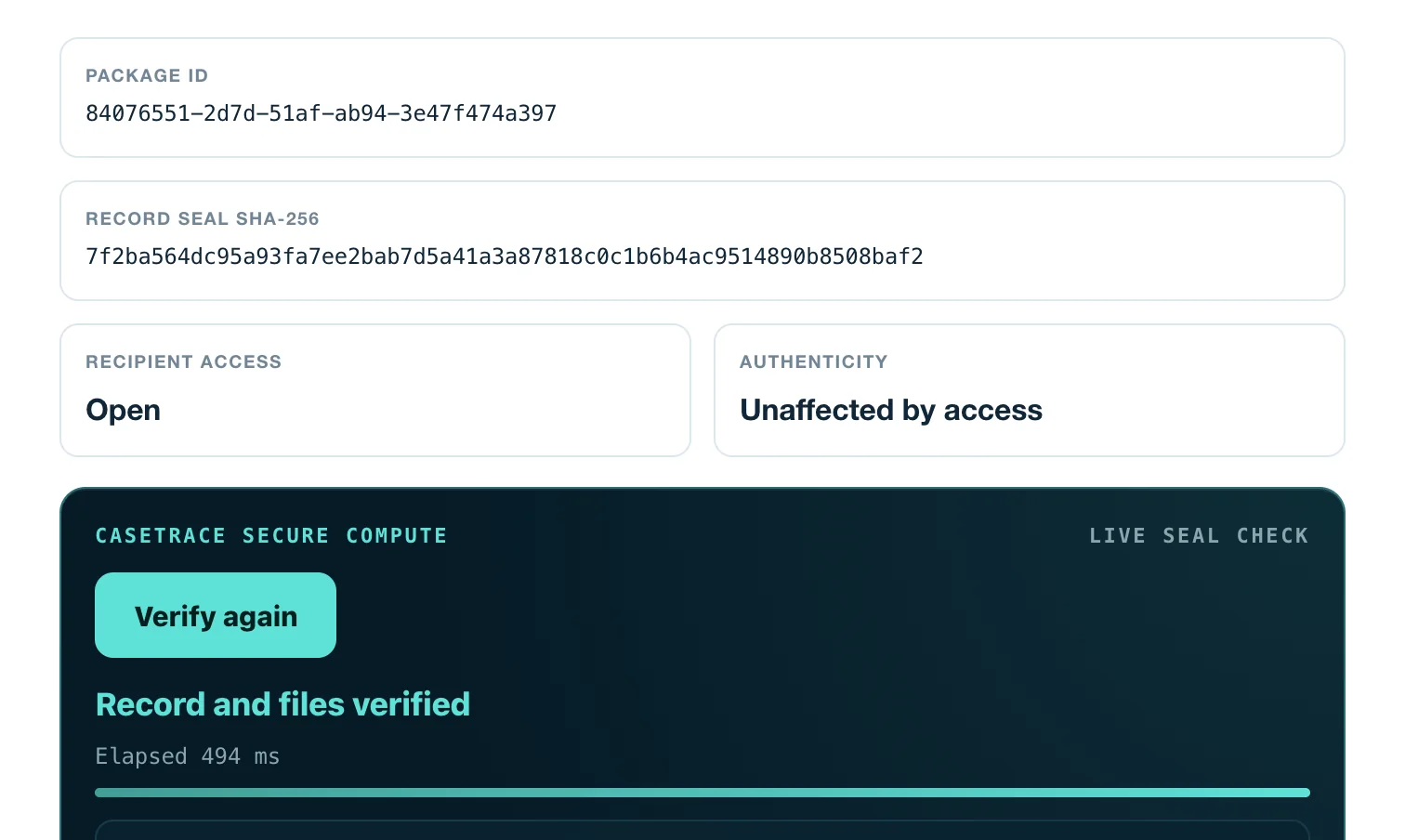
A sealed package's verification page: the package ID, the record seal, recipient access open, and Record and files verified after a live seal check.
The seal, checked: record and files verified, in the browser, nothing uploaded.